GlycoReset is a sublingual liquid drop marketed for blood sugar and metabolic wellness support — the kind of quiet, everyday factor that's easy to miss when the real culprit behind a mid-afternoon energy slump is a glucose swing rather than a bad night's sleep. Before it earns a spot in anyone's routine, here's the full ingredient panel, exactly how the bottle says to use it, and a disclosure gap worth knowing about before you order one.
What GlycoReset actually is, in plain terms, before the ingredient-by-ingredient breakdown below.
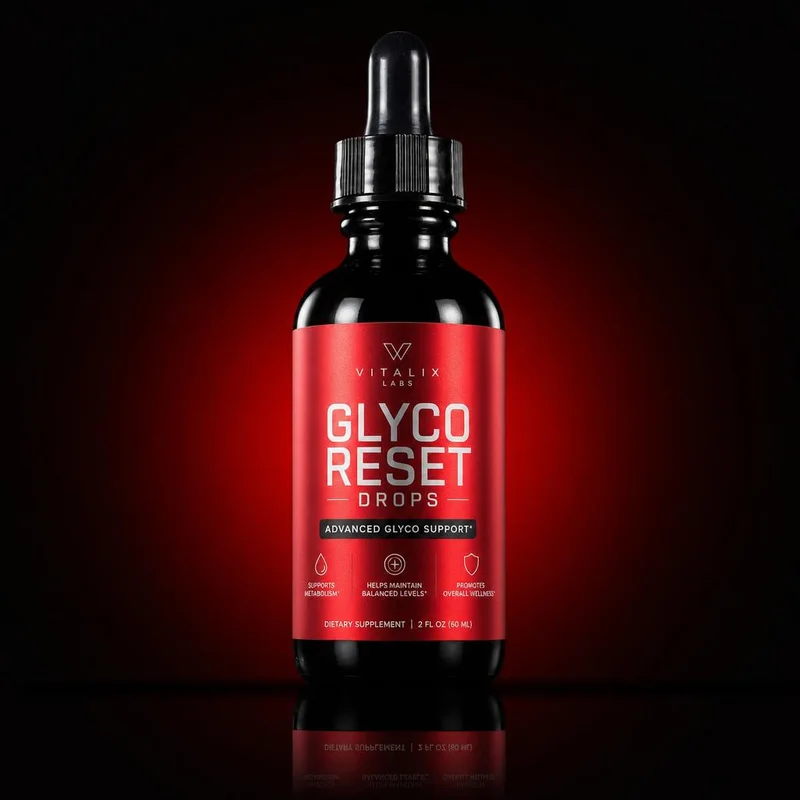
Official product image, GlycoReset / Vitalix Labs.
GlycoReset ships as a dropper bottle rather than a capsule, meant to be taken under the tongue each morning. It's positioned as a metabolic-wellness supplement, not a treatment — the seller's own site frames it with standard structure/function language ("supports healthy blood sugar levels") rather than a disease claim, and that's the framing worth holding onto as you read the rest of this entry.
Eight named plant and mineral ingredients make up the formula. Here's what each one is generally used for in a blood-sugar-support context, in plain language.
Berberine bark extract. The lead ingredient by most accounts, and the one with the deepest research base of the eight — a compound studied across a number of published meta-analyses looking at its effect on fasting glucose markers. It's also the ingredient most likely to interact with prescription diabetes medication, which is why the caution section below matters.
Ceylon cinnamon. Distinct from the cheaper cassia cinnamon sold in most grocery stores, Ceylon is the lower-coumarin variety and the one more commonly used in supplement formulas for that reason.
Gymnema sylvestre. A leaf extract traditionally used in Ayurvedic practice and now a common component of blood-sugar-support blends; its name translates roughly to "sugar destroyer" in Hindi, which is why it shows up in this category so often.
Bitter melon. A fruit extract with a long history of use in South and Southeast Asian traditional medicine for metabolic support, and a frequent co-ingredient alongside berberine in formulas like this one.
Banaba leaf extract. Contains corosolic acid, a compound some smaller studies have linked to modest effects on glucose uptake.
Chromium picolinate. A mineral form of chromium included in a wide range of metabolic-support supplements; it's one of the few ingredients on this list with an established Daily Value, though GlycoReset doesn't state how much it's providing (more on that below).
Juniper berry. Used here primarily as a mild digestive-support and flavoring botanical rather than as a primary active ingredient.
Licorice root. Included in some metabolic blends for digestive comfort, but worth flagging on its own — licorice root can raise blood pressure in sensitive individuals, which matters if you're already managing blood pressure with medication. See the caution section below.
The label's instructions are simple. Here's how that translates into an actual daily routine, guide-style.
That's the labeled serving — held sublingually for a short moment rather than swallowed straight down, which is the usual method for a liquid formula like this one.
If tracking blood sugar or energy levels is already part of your routine, jot down a baseline before you start. Without one, it's genuinely hard to tell a real change from a coincidence four weeks later.
One bottle is a 30-day supply, and that's the minimum window worth running before deciding whether it did anything — a single week, positive or negative, rarely tells you much of anything on its own.
This is the part of the entry that's easy to skip past, and the part most worth reading.
GlycoReset's public label information names all eight ingredients but doesn't break out how much of each one is actually in a serving — it's presented as a proprietary blend rather than an itemized panel. That matters for two practical reasons: there's no way to compare what's in the bottle against the doses used in the published research on an ingredient like berberine, and a prescriber can't fully assess interaction risk without knowing the actual amounts involved. Neither of those is a reason to assume the worst, but it is a real gap, and it's the single biggest thing this entry can't verify on your behalf.
It's also worth noting directly: some third-party promotional material for this product has made claims well beyond what the seller's own site states — specific disease-reversal language, for instance. This entry doesn't repeat those claims, and neither does GlycoReset's own listed product description. Treat any version of this pitch that promises a cure or a reversal of a diagnosed condition as marketing overreach, not as something reflected in the actual label.
Take metformin or another prescription diabetes medication, take a blood thinner, take blood pressure medication (licorice root specifically can raise blood pressure in sensitive people), take a statin, or are pregnant or nursing. Berberine in particular is well known for interacting with several common prescriptions, so this isn't a routine to layer on quietly alongside existing medication without a conversation first.
Per the seller's own site, GlycoReset is sold in three package tiers, working out to roughly $49–$79 per bottle depending on how many you buy at once — multi-bottle packages bring the per-bottle price down, which is a standard structure for this category rather than anything specific to this product. The seller also lists a 60-day money-back guarantee on its own site; as with any third-party refund policy, that's the seller's claim to honor, not something this guide can verify or enforce.
The link below is a placeholder — Ronaldo needs to swap in the real affiliate/tracking link before this page goes live in any campaign.
GlycoReset's ingredient list leans on genuinely researched compounds — berberine and chromium in particular have real published research behind them for blood-sugar-related markers — put into a liquid, once-a-day format that's easier for some people to stick with than a multi-capsule routine. What holds it back from a clean recommendation is the missing dosage information: without it, there's no way to confirm the formula actually delivers amounts in line with that research, and no way for a prescriber to fully clear it against existing medication. If you're comfortable trialing a proprietary blend and you've cleared it with a doctor first, especially given berberine's medication interactions, it's a reasonable one to test for a full 30-day cycle. If exact dosing matters to you, or you're not able to check in with a prescriber first, that's a real reason to look elsewhere or wait for fuller disclosure.
This page reflects an independent read of GlycoReset's own published product information as of September 2026 and general, publicly available research on its named ingredients. Formulas and pricing from any supplement seller can change without notice — always check the current label before ordering. Nothing on this page, including any ingredient discussion, is intended to diagnose, treat, cure, or prevent any disease. This entry contains affiliate links; see our Disclosure page for details.